How Foodservice Businesses Can Respond to Inflation Without Losing Demand?

As the foodservice industry recovers from the pandemic, it is also facing rising inflation. When comparing broader price increases with foodservice, there appears to be a delay in how quickly inflation shows up in this sector.
During this period, suppliers and operators have been able to hold off on passing higher costs to customers. This creates a temporary sense of stability, where it may seem manageable to absorb cost increases for a short time.
However, this delay is not permanent. As inflation continues, foodservice pricing is expected to catch up, making cost increases unavoidable.
Table of Contents:
- Why Foodservice Pricing Lags Behind Inflation?
- Why Demand Is Still Holding (Post-Pandemic Behavior)?
- When Price Increases Become Unavoidable?
- Shrinkflation as an Alternative to Price Increases
- Risks of Poor Pricing Decisions
- What Recent Company Performance Shows About Pricing?
- How to Approach Pricing Decisions (Learning + Structure)?
Jump to a section that interests you, or keep reading.
Why Foodservice Pricing Lags Behind Inflation?
The gap between inflation and foodservice pricing exists because businesses have initially avoided passing costs downstream.
This delay allows operators to maintain current price points even as their input costs increase. While this may offer short-term relief, it creates pressure that builds over time.
Eventually, operators and suppliers will need to adjust pricing to reflect higher costs, bringing foodservice in line with broader inflation trends.
Why Demand Is Still Holding (Post-Pandemic Behavior)?
Despite rising costs, demand has remained steady due to changing consumer behavior after the pandemic.
As restrictions ease, people are eager to return to normal routines. Dining out has become part of that return, driven by a desire to move away from cooking at home.
This behavior has helped sustain demand in foodservice, even as prices begin to rise. Consumers continue to dine out, which provides a temporary buffer for operators managing rising costs.
When Price Increases Become Unavoidable?
The current gap between rising costs and stable pricing will not last.
As inflation continues to increase, businesses will eventually be required to pass those costs on. This marks the point where pricing adjustments become necessary rather than optional.
Once this shift begins, foodservice pricing will align more closely with inflation, affecting both operators and consumers.
Shrinkflation as an Alternative to Price Increases
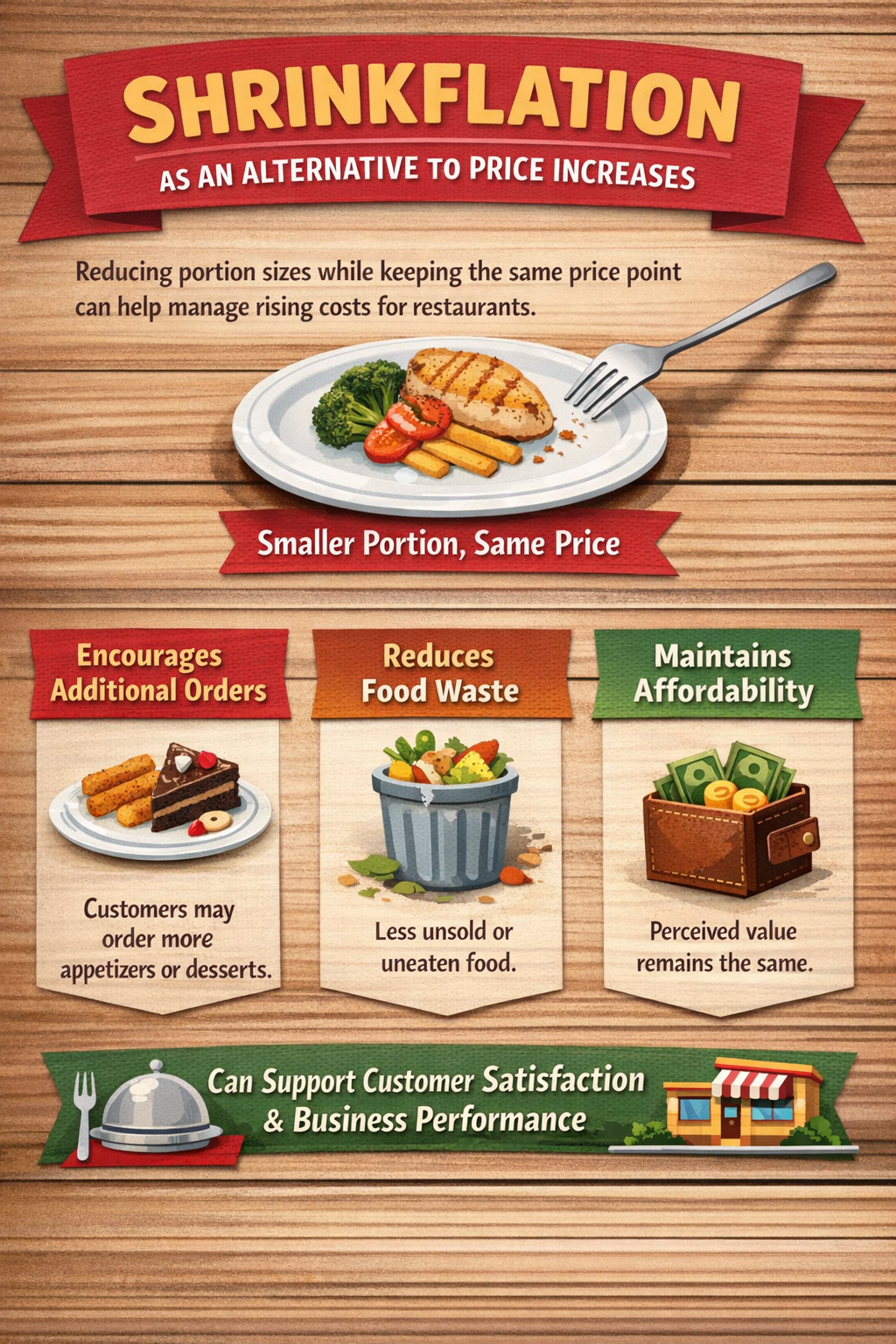
One approach used by restaurants to manage rising costs is shrinkflation.
Shrinkflation involves reducing portion sizes while maintaining the same price point. This allows businesses to manage cost increases without immediately raising menu prices.
There are potential advantages to this approach:
- Smaller portions may encourage customers to order additional items such as appetizers or desserts, which often carry higher margins
- Reduced portion sizes can lead to less food waste
- It can help maintain perceived affordability for customers
In some cases, if demand is driven by strong interest in dining out, this approach can support both customer satisfaction and business performance.
Risks of Poor Pricing Decisions
If conditions shift and demand weakens, pricing becomes more challenging.
As restaurants increase prices or adjust portion sizes, they must consider how these changes affect competitiveness. Understanding how far pricing can be adjusted without impacting demand becomes critical.
Challenges around pricing are not limited to foodservice. During the 2022 second-quarter earnings season, several large consumer companies saw declines in share prices.
These declines were linked to discussions about inflation without clear explanations of how companies planned to offset rising costs through pricing.
Without clear pricing actions or structured plans, concerns around margins and performance increase.
What Recent Company Performance Shows About Pricing?
Recent company results highlight the importance of clear pricing actions.
Some food and beverage companies performed better after announcing pricing changes. These actions included:
- list price increases
- adjustments in price pack configurations
- consistent communication across product lines
These pricing decisions were notable in both scale and consistency. In contrast, companies that did not clearly address how they would respond to inflation faced negative reactions.
This contrast shows that pricing decisions and communication play a central role in how businesses manage inflation.
How to Approach Pricing Decisions (Learning + Structure)?
Improving pricing decisions starts with reviewing past performance.
Looking at previous pricing decisions allows companies to identify where outcomes were not as expected. This provides a basis for refining pricing management, analysis, and communication.
Another key aspect is applying structure to pricing strategies.
Many companies respond to inflation by applying broad price increases based on raw material cost changes. However, pricing decisions can also consider differences across:
- products
- channels
- seasonality
- customer segments
Pricing strategies built on these factors rely on data and analysis rather than uniform adjustments. This allows businesses to manage pricing in a more structured way while addressing cost pressures.
Conclusion
Foodservice businesses are operating in a period where demand recovery and rising inflation overlap.
While demand remains supported by post-pandemic behavior, cost pressure continues to build. The current delay in pricing adjustments provides only temporary relief.
As inflation persists, businesses will need to respond through pricing changes, portion adjustments, or a combination of both.
Shrinkflation offers one way to manage costs without immediate price increases, but it must be considered alongside broader pricing decisions.
Recent market behavior shows that clear and structured pricing actions are important when responding to inflation. By reviewing past decisions and applying structured approaches, foodservice businesses can navigate rising costs while maintaining demand.