The Role of Rebates in Pharmacy Benefits

When it comes to pharmacy benefits, few topics generate as much debate as rebates. Often presented as a major source of savings, rebates have become central to how pharmacy benefit plans are structured. Yet for many plan sponsors and consultants, the real value of rebates is difficult to assess.
Rebates were originally intended to lower the net cost of prescription drugs. Over time, however, they have developed into a complex system that is hard to track, compare, and fully understand. While rebate totals may appear substantial, they do not always result in lower overall pharmacy costs.
This growing gap between perception and reality has placed rebates under closer examination.
Table of Contents:
- How Rebates Work in Pharmacy Benefits?
- Why Rebates Can Create the Illusion of Savings?
- Growing Scrutiny of Rebate Practices
- The Push for Greater Transparency
Jump to a section that interests you, or keep reading.
How Rebates Work in Pharmacy Benefits?
At a basic level, a rebate is a discount that a pharmaceutical manufacturer provides to a pharmacy benefit manager (PBM). In exchange, the PBM agrees to place the manufacturer’s drug on the plan’s formulary.
Over time, rebate arrangements have expanded beyond simple discounts. While there are many types of rebates, plan sponsors often see only a single summarized number.
Common rebate structures include:
- Access rebates
- Positioning rebates
- Performance-based rebates
- Market-share incentives
- Manufacturer incentives
- Indication-based arrangements
- Outcomes-based arrangements
Despite this variety, rebate reporting is not consistent across PBMs. Some PBMs disclose only part of the total value they negotiate with manufacturers, while others group multiple revenue streams together under the term “rebate.”
This inconsistency makes it difficult for plan sponsors to determine how much value they are actually receiving.
Why Rebates Can Create the Illusion of Savings?
A common assumption is that higher rebates lead to lower pharmacy costs. In practice, this is not always the case.
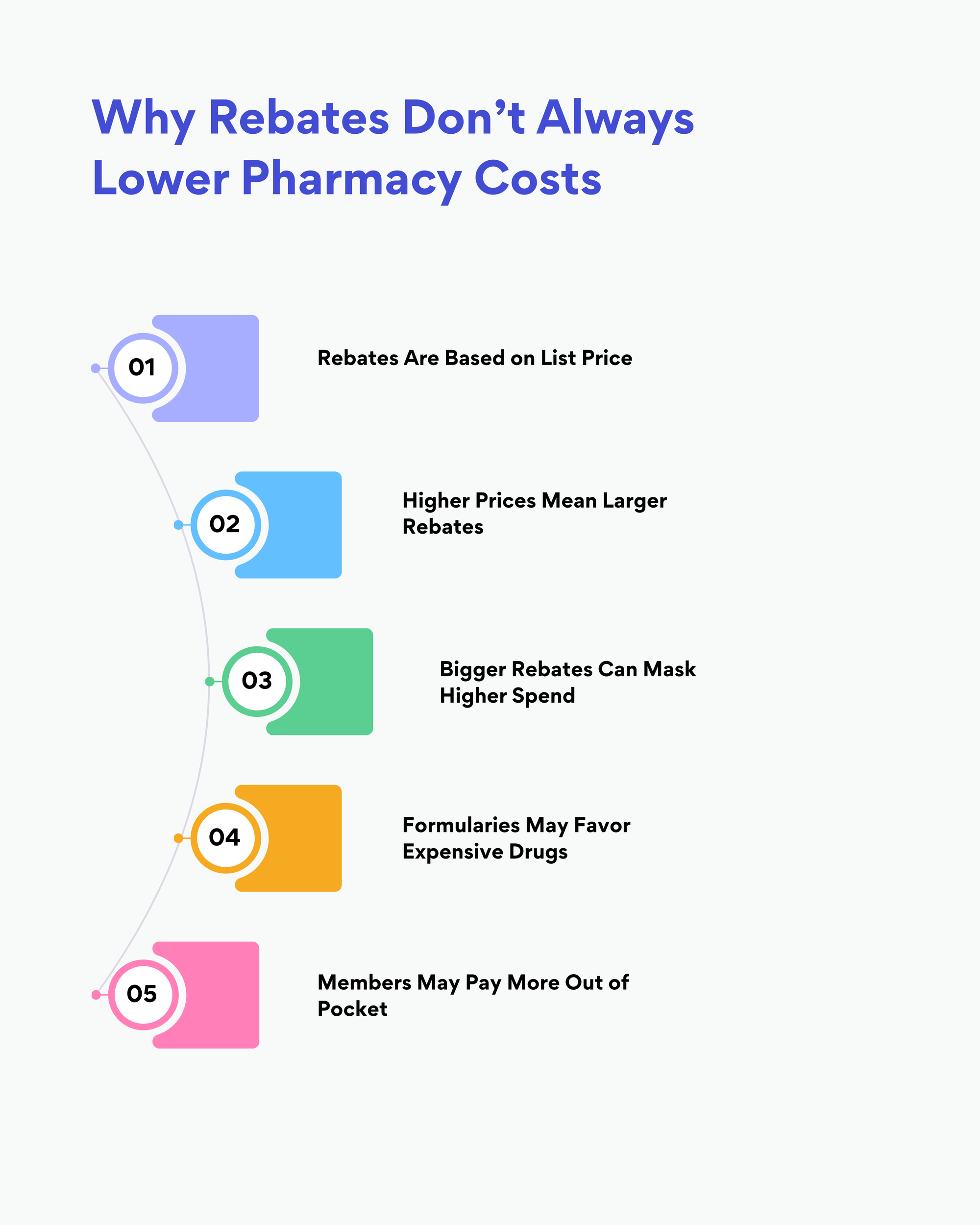
Rebates are typically calculated as a percentage of a drug’s list price. As list prices increase, rebate amounts also increase. This structure can encourage PBMs to favor higher-priced, brand-name drugs, even when lower-cost alternatives are available.
As a result:
- Plans may face higher overall drug spending
- Members may experience higher out-of-pocket costs
- Formularies may become more restrictive
Large rebate checks can look appealing on paper, but they often reflect higher upfront spending rather than true cost reduction.
Growing Scrutiny of Rebate Practices
The increasing complexity of rebates has drawn regulatory attention. The Federal Trade Commission is currently examining whether large PBMs have structured rebate arrangements in ways that raise drug prices, limit competition, and increase costs for plan sponsors and patients.
One key concern is that some PBMs may have favored expensive, highly rebated insulin products over lower-cost alternatives. This approach may have increased out-of-pocket costs, particularly for patients with high-deductible plans.
As scrutiny continues, rebate practices are becoming a focal point in broader discussions about pharmacy benefit reform.
The Push for Greater Transparency
In response to these concerns, transparency has become a central issue in rebate discussions. Proposed regulations aim to change how rebates are handled and distributed.
One proposal would require PBMs to pass a larger share of manufacturer rebates—often 85% or more—directly to members at the pharmacy counter. This approach is intended to reduce out-of-pocket costs at the point of purchase rather than relying on rebates that are reconciled later.
Greater transparency would also help plan sponsors better understand:
- How rebate dollars are calculated
- How much value is retained versus passed through
- Whether rebate strategies align with overall cost goals
Conclusion
Rebates play a significant role in pharmacy benefits, but their impact is not always straightforward. While they were designed to lower drug costs, evolving rebate structures and inconsistent reporting have made it difficult to assess their true value.
As regulatory scrutiny increases and transparency expectations rise, plan sponsors are paying closer attention to how rebates function within their pharmacy benefit strategy. Understanding how rebates work, and how they are reported, is a critical step toward making more informed decisions about prescription drug costs.