Price Pack Architecture Strategies for Foodservice in Uncertain Economic Conditions

Economic and political shifts are creating uncertainty across the foodservice industry. Rising costs, changing consumer behavior, and supply chain disruptions are forcing operators and consumer products manufacturers to reconsider how they approach pricing, portions, and product packaging. Price Pack Architecture (PPA) provides a structured approach for adjusting value without relying only on price increases.
Table of Contents:
- Why Foodservice Is Under Pressure?
- The Role of Price Pack Architecture
- Shrinkflation in Foodservice: Opportunity or Risk?
- How Consumer Product Manufacturers Should Respond?
- Practical PPA Strategies
Jump to a section that interests you, or keep reading.
Why Foodservice Is Under Pressure?
The foodservice sector is experiencing pressure from several economic factors. The U.S. Consumer Price Index recorded a 2.7% year-over-year increase according to the U.S. Department of Labor’s June 2025 report. As costs rise across the economy, businesses across the foodservice chain are becoming cautious about pricing decisions.
Many suppliers and operators have delayed passing higher costs downstream. However, this delay cannot continue indefinitely. At some point, higher costs will move through the value chain, bringing foodservice pricing closer to the reality of inflation and supply disruptions.
Even as disposable income becomes tighter for many households, dining out continues to hold value for certain consumers. Some diners still view restaurant visits as a comfort, a necessary convenience, or part of their social routine.
Consumer priorities reinforce this dynamic. According to a 2025 food and beverage trend report by Datassentials:
- 69% of diners prioritize great taste
- 56% prioritize product quality
- 41% consider portion size important
These preferences show that value in foodservice is shaped by more than price alone.
The Role of Price Pack Architecture
Price Pack Architecture focuses on structuring product formats and pricing in ways that align with customer expectations, channel requirements, and cost pressures.
Instead of relying on uniform price increases, companies can adjust multiple elements of their offering. This can include:
- varying pack sizes
- adjusting portions
- structuring different value tiers
- aligning pricing with specific distribution channels
Through these adjustments, companies can maintain competitiveness while responding to changes in cost structures and customer demand.
Shrinkflation in Foodservice: Opportunity or Risk?
One approach that has appeared in inflationary environments is shrinkflation, where portion sizes decrease while prices remain stable.
This tactic gained attention during the pandemic when supply shortages required restaurants to adjust portion sizes temporarily. While shrinkflation can help manage costs and maintain margins, it also carries reputational risk. Consumers who notice smaller portions may interpret the change negatively if they believe value is being reduced without transparency.
At the same time, smaller portions can create operational benefits in certain situations.
For restaurants, reduced portion sizes may encourage customers to add additional items such as appetizers or desserts. These items often carry higher margins than main dishes.
For diners, smaller portions can align with preferences for balanced meals rather than oversized servings. In this context, portion adjustments can meet both operational and customer needs.
How Consumer Product Manufacturers Should Respond?
Changes in restaurant pricing and portion sizes create new challenges for consumer products manufacturers supplying the foodservice sector.
As operators increase prices or reduce portions, manufacturers must determine price levels that allow them to remain competitive while supporting their customers.
Revenue growth management frameworks and structured pricing decisions help manufacturers navigate these conditions. These approaches provide guidance for responding to rising costs, changing consumer expectations, and operator demand for value.
Recent industry data illustrates the pressure on pricing strategies. Bain & Company estimates that roughly three-quarters of consumer products sales growth in 2024 came from price increases rather than volume growth. This suggests limited room for further price increases in the near term.
Practical PPA Strategies
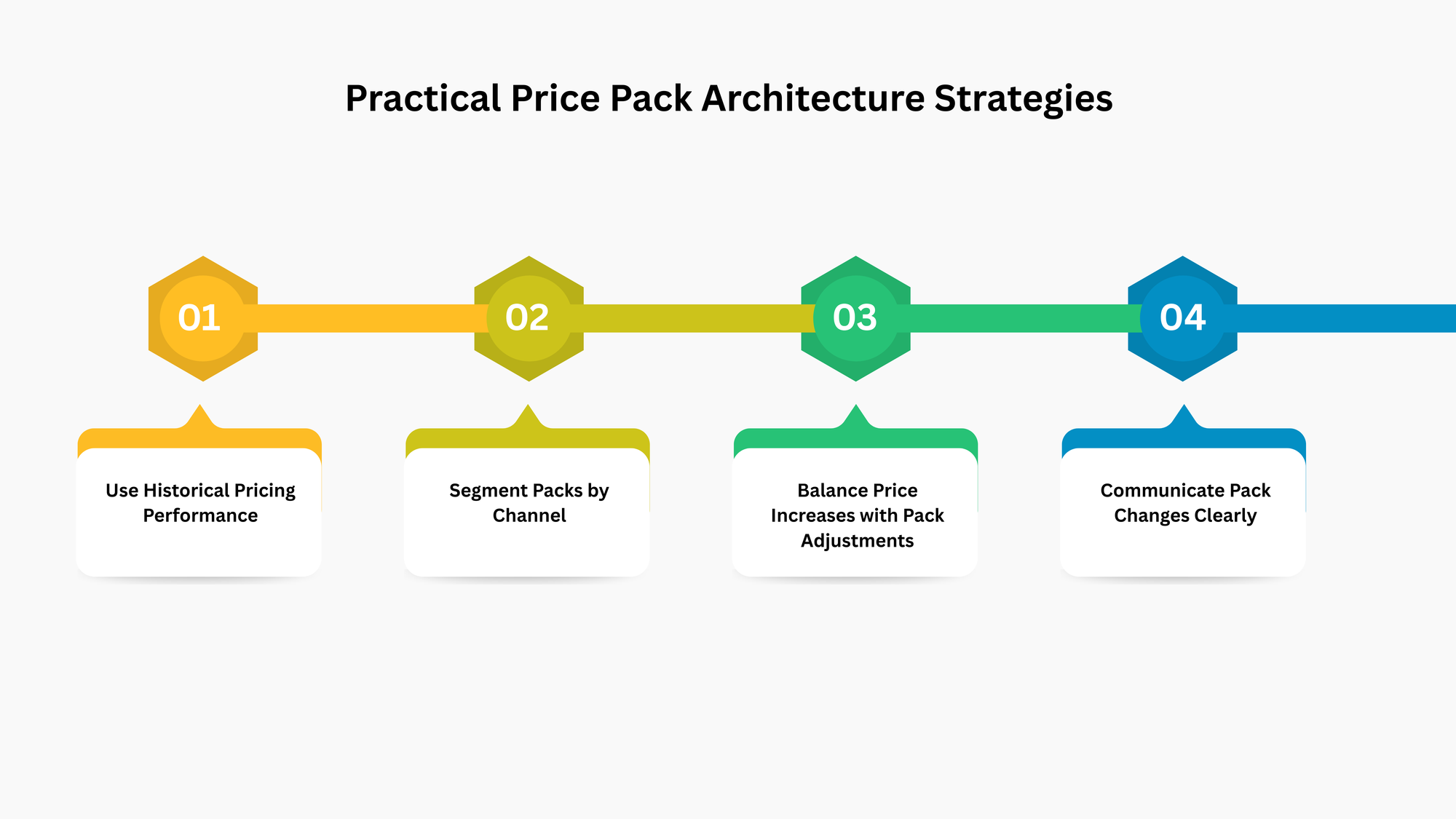
Use Historical Pricing Performance
Past pricing outcomes can help inform current strategy. Reviewing previous approaches such as cost-plus pricing, tiered pricing, and dynamic pricing can highlight which strategies performed well under certain conditions.
Operational incentives and cost monitoring can also help soften the impact of individual price increases while identifying areas where margins may become strained.
Segment Packs by Channel
A single pricing structure rarely works across every distribution channel. Manufacturers can design pack formats and pricing structures that align with the needs of different channels such as distributors, restaurants, and retail partners.
This segmentation allows companies to respond to differences in demand, purchasing patterns, and operational requirements.
Balance Price Increases with Pack Adjustments
Broad price increases can provide short-term relief from rising costs, but they may also affect customer relationships. Adjusting pack structures alongside pricing changes allows companies to manage cost pressures without relying entirely on price increases.
Communicate Pack Changes Clearly
Clear communication plays an important role when introducing pack or pricing changes. Transparent conversations with operators and distributors help maintain strong partnerships and encourage shared investment in long-term solutions.
Final Thoughts
Price Pack Architecture provides manufacturers with a structured way to adjust pricing and product formats during periods of economic uncertainty. By combining pack adjustments, pricing analysis, and clear communication, companies can respond to cost pressures while continuing to support foodservice partners navigating the same environment.