Managing Pharmaceutical Rebates with EDI: Improving Accuracy and Reducing Administrative Load

Pharmaceutical manufacturers work with a wide network of partners—distributors, pharmacy chains, PBMs, health plans, and government programs. Because pricing arrangements vary across these groups, rebate administration has become a routine but highly detailed part of the industry. To support this, manufacturers often depend on structured systems that can validate pricing terms, confirm contract eligibility, and issue credits accurately. One of the most reliable tools for this process is Electronic Data Interchange (EDI).
This blog outlines how special pricing, rebates, and EDI intersect within the pharmaceutical ecosystem.
Table of Contents:
- How Special Pricing Works in the Pharmaceutical Supply Chain?
- How Rebates Operate Across the Industry?
- How EDI Supports Pricing and Rebate Administration?
Jump to a section that interests you, or keep reading.
How Special Pricing Works in the Pharmaceutical Supply Chain?
Special pricing agreements help manufacturers tailor costs for different customers based on contract terms and purchasing behavior.Yes
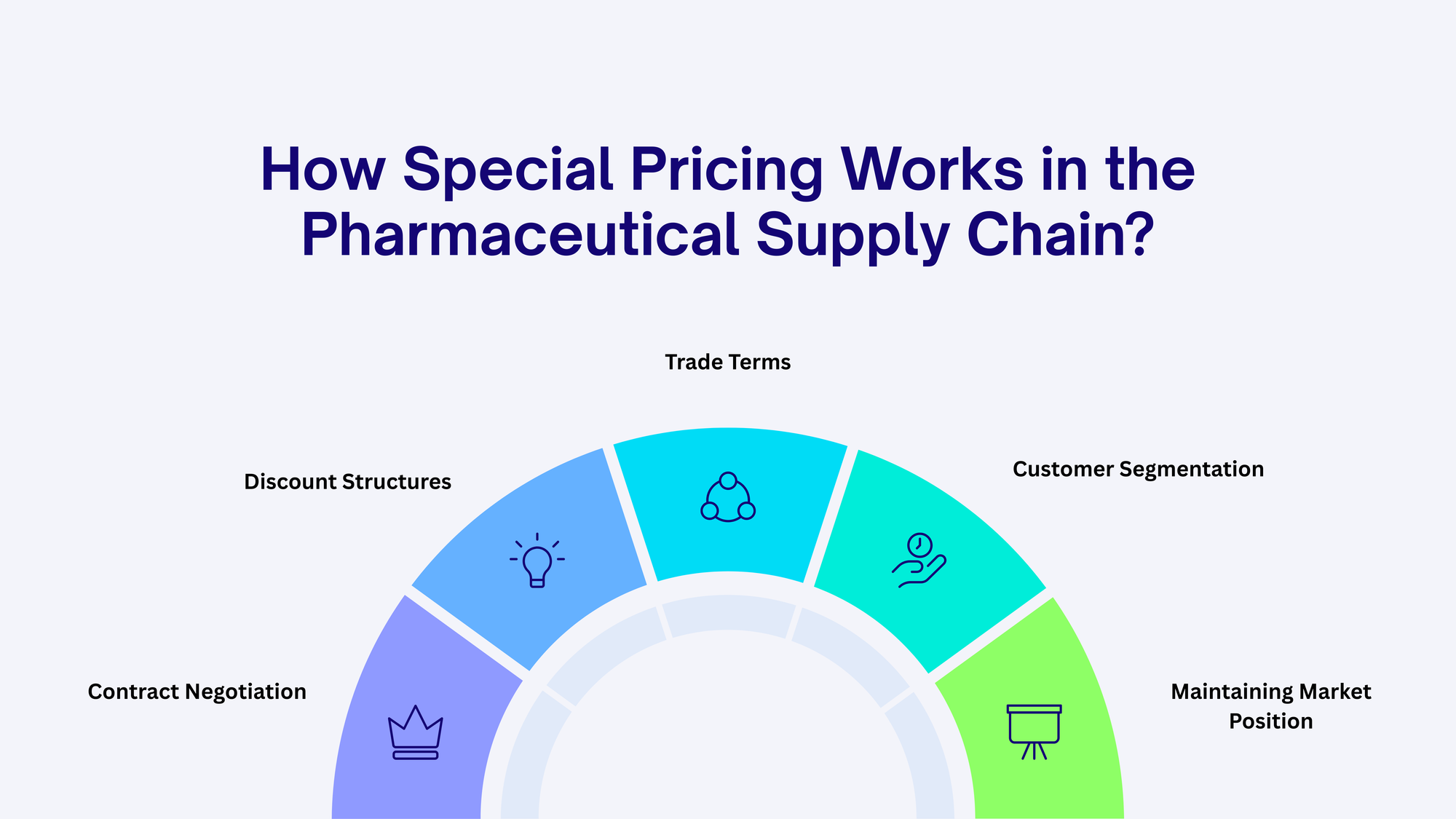
Contract Negotiation
Manufacturers work with wholesalers, large pharmacy chains, GPOs, and government agencies to define the terms for discounted pricing. These terms establish how pricing adjustments will apply across products and customer groups.
Discount Structures
Special pricing may include tiered or volume-linked discounts. Certain customers may receive reduced prices when their purchase quantities meet specific thresholds or targets.
Trade Terms
Some pricing arrangements include added commercial terms—such as extended payment windows—to support customer financial planning.
Customer Segmentation
Manufacturers often sort customers into groups based on criteria such as type of healthcare facility or purchasing history. Each group may receive different pricing allowances.
Maintaining Market Position
Special pricing supports manufacturers in adjusting their strategies in response to competitor activity, demand shifts, or specific market needs.
How Rebates Operate Across the Industry?
Rebates are widely used across the pharmaceutical market and are negotiated with PBMs, health plans, and government bodies. PBMs are especially influential, as they manage rebate agreements for many health plans and employers.
Common Types of Rebates
- Volume-Based Rebates: These rebates reward higher purchasing or prescribing volumes with higher rebate amounts.
- Performance-Based Rebates: Some agreements rely on metrics such as market share goals or quality-related outcomes that, once reached, trigger additional rebates.
Additional Factors That Influence Rebates
- Formulary Status: A product’s position on a formulary or preferred drug list may determine rebate eligibility and amounts.
- Government Program Requirements: Manufacturers also negotiate rebate terms with programs such as Medicaid and Medicare, helping reduce costs within public healthcare.
Together, special pricing and rebates help manufacturers manage costs, maintain competitive pricing, and support access across multiple channels. These arrangements require careful validation, accurate contract interpretation, and full compliance with regulatory expectations.
How EDI Supports Pricing and Rebate Administration?
Because rebate administration involves ongoing data exchange, contract checks, and claim processing, EDI offers a structured approach that reduces manual effort and promotes accuracy.
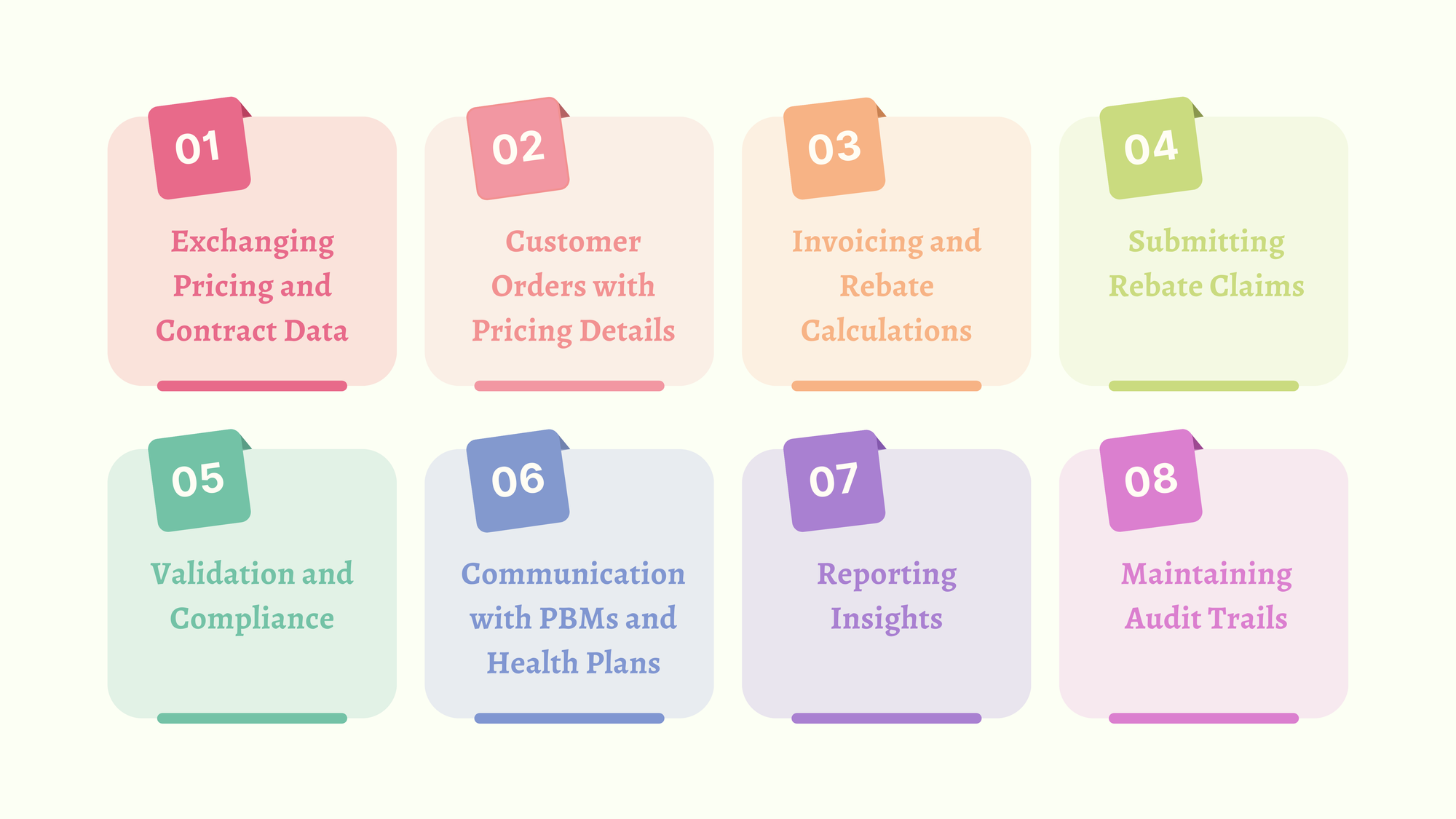
1. Exchanging Pricing and Contract Data
EDI allows manufacturers to share pricing agreements and rebate terms with their trading partners. It also sends product pricing details—such as discounts and volume tiers—so all parties can reference current information.
2. Customer Orders with Pricing Details
When customers place orders, EDI forwards confirmations containing final price details, discounts, and special terms. This ensures both sides are aligned before fulfillment.
3. Invoicing and Rebate Calculations
After products are shipped, EDI generates invoices that include all negotiated pricing arrangements.
EDI systems can also compute rebate amounts automatically by referencing the terms set in the contract—whether based on volume, performance, or formulary position.
4. Submitting Rebate Claims
Manufacturers use EDI to send rebate claims to PBMs, health plans, or government entities. These transmissions follow standardized formats to support quick and consistent processing.
5. Validation and Compliance
EDI tools can check rebate claims against contract rules and flag discrepancies.
They also create compliance reports that help manufacturers demonstrate adherence to rebate agreements and regulatory requirements.
6. Communication with PBMs and Health Plans
With EDI, manufacturers maintain structured communication channels with organizations that manage large rebate programs, improving coordination and processing speed.
7. Reporting Insights
Data generated through EDI supports review of pricing and rebate activity. Manufacturers can assess how well programs are performing and where adjustments may be needed.
8. Maintaining Audit Trails
All transactions processed through EDI are logged, creating traceable records for pricing, orders, and rebate submissions. This transparency supports internal reviews and regulatory expectations.
Conclusion
Managing special pricing and rebates in the pharmaceutical industry requires precision, clear documentation, and dependable coordination across multiple stakeholders. With so many variables affecting pricing—ranging from contract terms and discount structures to formulary placement and government program requirements—manufacturers need a system that supports consistency and reduces administrative pressure. EDI brings structure to these activities by standardizing data exchange, improving accuracy in pricing validation, and helping ensure that rebate claims follow the terms outlined in each agreement. As rebate programs continue to expand in scale and complexity, EDI serves as a practical foundation for manufacturers looking to maintain clarity, reduce errors, and keep their commercial processes running smoothly.