How Can Pharmaceutical Rebates Be Improved?

Pharmaceutical rebates play a central role in drug pricing, formulary positioning, and financial planning. While they help manufacturers compete for market access, their complexity often creates operational and reporting challenges. Improving how rebates are managed requires tightening processes that already exist—contracts, compliance, data, tiering, and technology—rather than introducing entirely new approaches.
Based on the provided content, here are the most reliable ways pharmaceutical rebates can be improved.
Table of Contents:
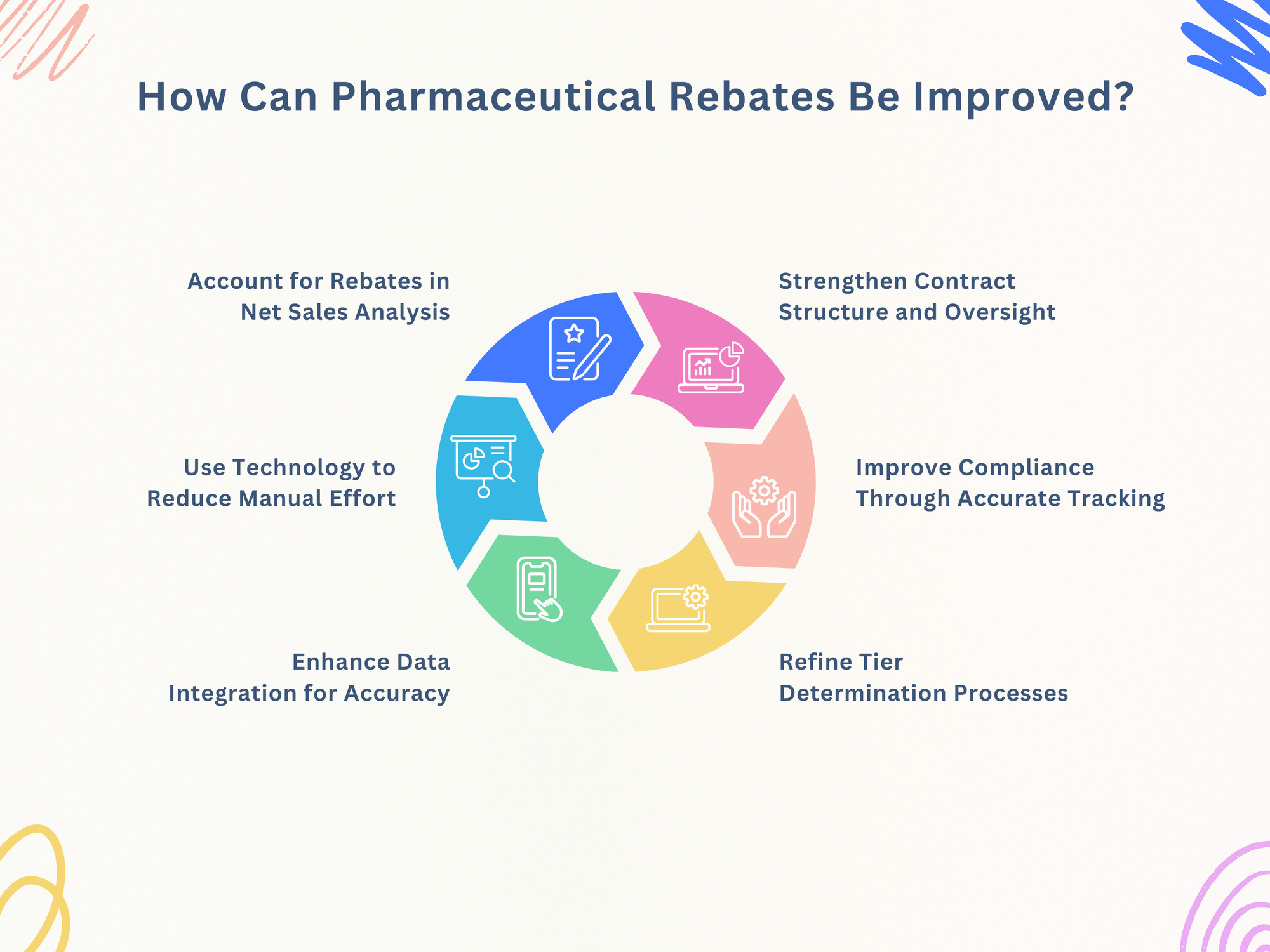
- Strengthen Contract Structure and Oversight
- Improve Compliance Through Accurate Tracking
- Refine Tier Determination Processes
- Enhance Data Integration for Accuracy
- Use Technology to Reduce Manual Effort
- Account for Rebates in Net Sales Analysis
Jump to a section that interests you, or keep reading.
Strengthen Contract Structure and Oversight
Rebate agreements define how value is calculated, earned, and paid. When contract terms are unclear or outdated, disputes and reporting errors follow.
Ways to improve:
- Ensure rebate contracts clearly define eligibility, rebate amounts, timelines, and duration
- Allow contractual flexibility so agreements can adjust to pricing or market changes
- Conduct regular contract reviews to stay aligned with regulations and market conditions
Clear and current contracts reduce misunderstandings and support smoother rebate execution.
Improve Compliance Through Accurate Tracking
Rebate programs operate within strict regulatory frameworks, particularly in the U.S. Compliance failures often stem from weak tracking and reporting controls.
Ways to improve:
- Maintain systems that accurately track all rebate transactions
- Ensure rebate data supports required reporting under laws such as the Anti-Kickback Statute and False Claims Act
- Monitor Medicaid-related rebate activity carefully, especially where managed care organizations are involved
Improved compliance processes help protect organizations from penalties and reporting discrepancies.
Refine Tier Determination Processes
Tier placement directly influences rebate values and negotiation outcomes. Outdated or poorly reviewed tier structures can weaken pricing strategies.
Ways to improve:
- Review drug tier placement on a regular basis
- Adjust tiers as market conditions, competition, or therapeutic relevance change
- Use sales and usage data to guide tier decisions
More disciplined tier determination supports better rebate alignment with market realities.
Enhance Data Integration for Accuracy
Rebate accuracy depends on how well data sources are aligned. Fragmented data leads to calculation errors and distorted financial results.
Ways to improve:
- Integrate sales data with contract terms so rebate calculations follow agreed conditions
- Consolidate data into a centralized system to reduce inconsistencies
- Automate data collection and processing to limit manual errors
Improved data integration supports more reliable rebate calculations and clearer financial visibility.
Use Technology to Reduce Manual Effort
Manual rebate processes increase workload and error risk. The content highlights the growing role of specialized software in managing rebate complexity.
Ways to improve:
- Use systems that automate rebate calculations
- Adopt tools that integrate data from multiple internal sources
- Rely on real-time insights to support decision-making and forecasting
Technology improves consistency, speeds up processing, and supports more informed rebate management.
Account for Rebates in Net Sales Analysis
Rebates directly reduce the net price of drugs. When they are not fully reflected in financial reporting, revenue projections can appear higher than actual results.
Ways to improve:
- Include all rebate obligations when evaluating sales performance
- Identify additional incentives that may affect net revenue
- Align forecasting with actual post-rebate revenue outcomes
A clearer view of net sales supports stronger planning and more realistic margin expectations.
Conclusion
Pharmaceutical rebates can be improved by tightening existing practices rather than reinventing the process. Clear contracts, disciplined compliance, structured tier management, integrated data, and automated systems all contribute to better rebate outcomes. When rebates are accurately calculated and fully reflected in financial analysis, organizations gain clearer insight into pricing performance and long-term planning.