Drug Supply Chain & the Role of Rebates

The drug supply chain is a complex system made up of multiple stakeholders, each responsible for moving medications from development to the patient. Understanding how this system works is especially important as drug prices remain a major concern for consumers, healthcare providers, and policymakers.
Rebates play a meaningful role within this chain. While they are often described as a way to reduce costs, they also add layers of complexity that can make pricing harder to understand.
Table of Contents:
- Key Stakeholders in the Drug Supply Chain
- How Rebates Fit Into the Drug Supply Chain?
- Challenges and Controversies in the Supply Chain
Jump to a section that interests you, or keep reading.
Key Stakeholders in the Drug Supply Chain
The drug supply chain depends on several interconnected participants. Each one contributes to how medications are produced, priced, distributed, and ultimately accessed by patients.
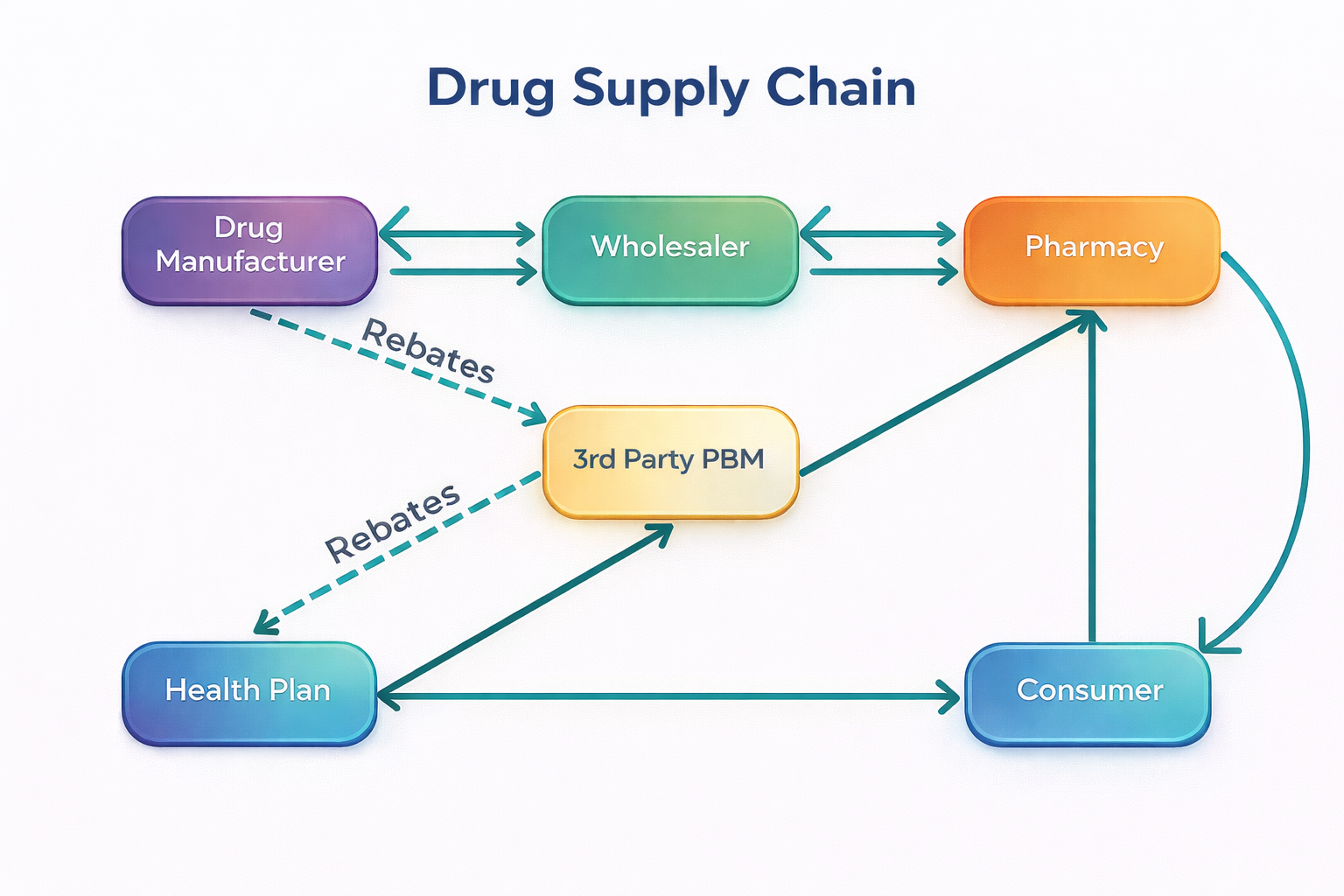
The main stakeholders include:
-
Drug manufacturers
These companies research, develop, produce, and market medications. They ensure drugs meet regulatory requirements, manufacture approved drugs at scale, and sell them to wholesalers. -
Wholesalers
Wholesalers purchase drugs in bulk from manufacturers and distribute them to pharmacies, hospitals, and healthcare providers. Their role is to ensure drugs are available where and when they are needed. -
Pharmacies
Pharmacies purchase medications from wholesalers and dispense them to patients based on prescriptions. They also educate patients on safe and appropriate medication use. -
Pharmacy benefit managers (PBMs)
PBMs manage prescription drug benefits for health plans. They negotiate prices with manufacturers, manage formularies, and process prescription claims. PBMs play a significant role in determining drug costs through rebate negotiations. -
Health plans
Health plans provide insurance coverage for prescription drugs. They work closely with PBMs to decide which drugs are covered and how much consumers pay out of pocket. Rebates received through PBMs can affect overall drug costs. -
Consumers
Consumers are the final recipients of medications. Their out-of-pocket costs depend on pricing decisions made earlier in the supply chain.
How Rebates Fit Into the Drug Supply Chain?
Rebates are discounts that drug manufacturers provide to PBMs or health plans in exchange for favorable formulary placement. These agreements strongly influence which drugs are covered and how accessible they are within a health plan.
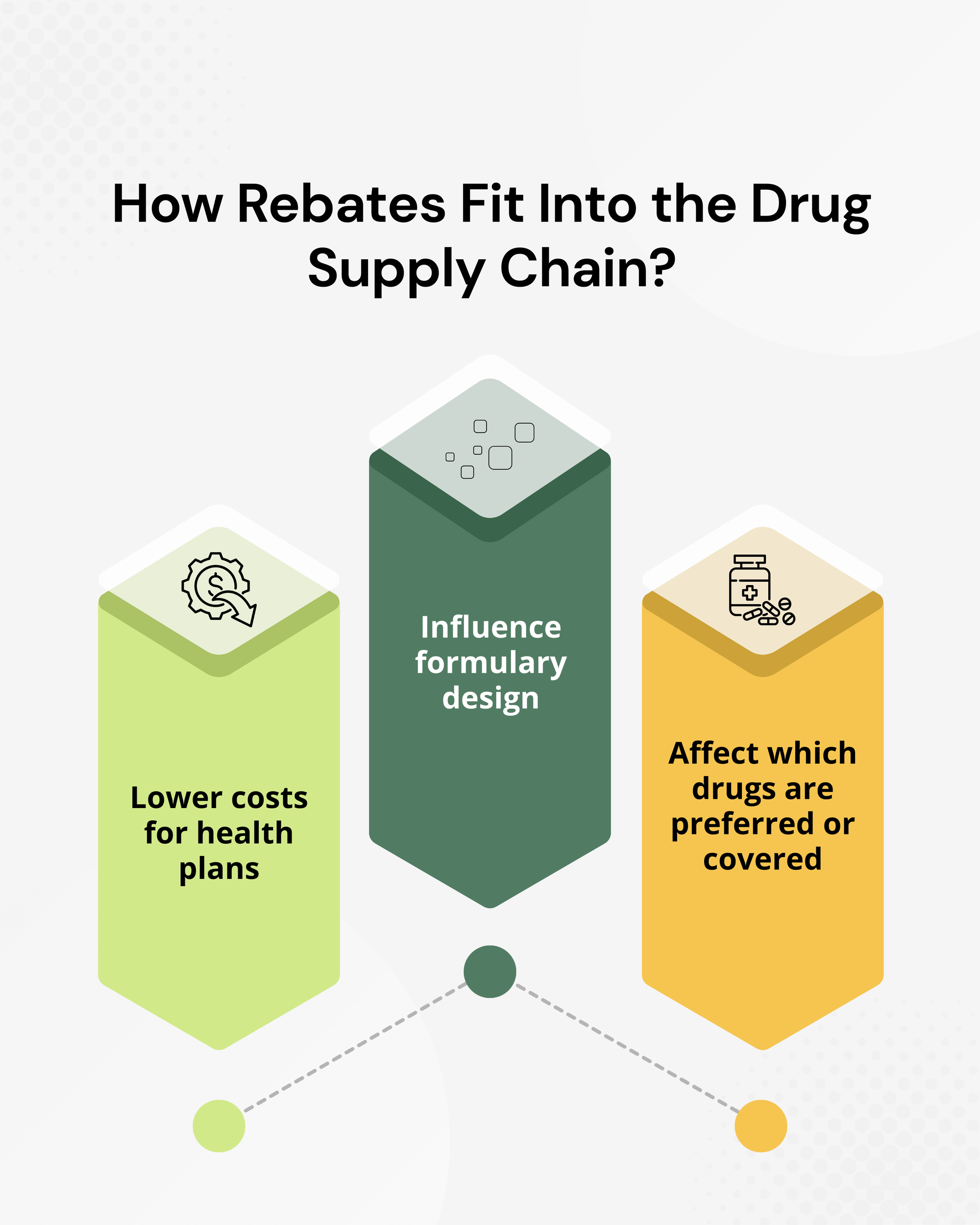
Rebates can:
- Lower costs for health plans
- Influence formulary design
- Affect which drugs are preferred or covered
However, rebates also introduce complexity. They are typically not applied at the pharmacy counter, meaning the list price of a drug can remain high even when rebates exist. As a result, consumers may not directly benefit from these discounts at the point of sale.
Challenges and Controversies in the Supply Chain
The current drug supply chain has drawn scrutiny due to several ongoing concerns.
Key challenges include:
-
Limited price transparency
Drug pricing is often difficult to understand. Rebates make it harder to connect list prices with what consumers ultimately pay. -
Persistently high drug prices
Even with rebates and negotiations, drug prices in the U.S. remain high compared to other countries, prompting calls for reform. -
PBM market influence
PBMs have significant control over formulary decisions and pricing. Their role has been criticized for potential conflicts of interest, especially when higher-rebate drugs are favored over lower-cost alternatives.
Conclusion
The drug supply chain relies on multiple stakeholders working together to ensure medications reach consumers. While the system supports widespread access to drugs, it also faces challenges related to pricing transparency, high costs, and the growing influence of intermediaries such as PBMs.
Rebates sit at the center of these challenges. Although they can reduce costs for health plans, they do not always lower out-of-pocket expenses for consumers. As discussions around drug pricing and healthcare reform continue, a clear understanding of the drug supply chain and the role rebates play within it remains essential.