3 CPG Pricing Strategies for Foodservice During Inflation

Inflation is no longer a short headline. It is showing up in raw materials, packaging, labor, fuel, and freight — month after month.
Many B2B manufacturers and foodservice operators initially chose to absorb rising costs. It felt responsible. Customers were under pressure too. But sustained inflation forces a harder question:
How long can margins carry the weight?
At some point, pricing must adjust. The issue is not whether to act — it is how to act thoughtfully rather than react under pressure.
Table of Contents:
- The Real Cost of Waiting
- Why Pricing Shouldn’t Be Based on the P&L Alone?
- Three Pricing Strategies to Consider
Jump to a section that interests you, or keep reading.
The Real Cost of Waiting
Let’s look at a simple example.
- Monthly revenue: $1,000,000
- Cost of Goods Sold (COGS): 50%
- Net income: 15%
That produces $150,000 in net income.
Now assume input costs rise by 10%. COGS moves from 50% to 55%.
Net income drops to 10%.
Profit becomes $100,000 instead of $150,000 — a $50,000 reduction every month.
If inflation continues, that decline compounds quickly. Using cash reserves to bridge the gap may buy time, but it does not restore margin.
Inflation may feel temporary. Margin erosion rarely is.
Why Pricing Shouldn’t Be Based on the P&L Alone?
Another common mistake is evaluating price increases purely from today’s production costs.
Inventory accounting matters.
Inventory sits on the balance sheet as an asset. It only becomes COGS when sold. That means:
- Product manufactured three months ago reflects older, lower costs.
- Product manufactured today reflects higher, current costs.
If pricing decisions ignore inventory timing, businesses may either raise prices too aggressively or not enough.
Pricing strategy should consider:
- Inventory turnover
- Product lifecycle
- Timing of cost increases
- Margin sustainability
Looking only at the income statement gives an incomplete picture.
Three Pricing Strategies to Consider
Most foodservice CPG pricing approaches fall into one of three categories. Each serves a different purpose.
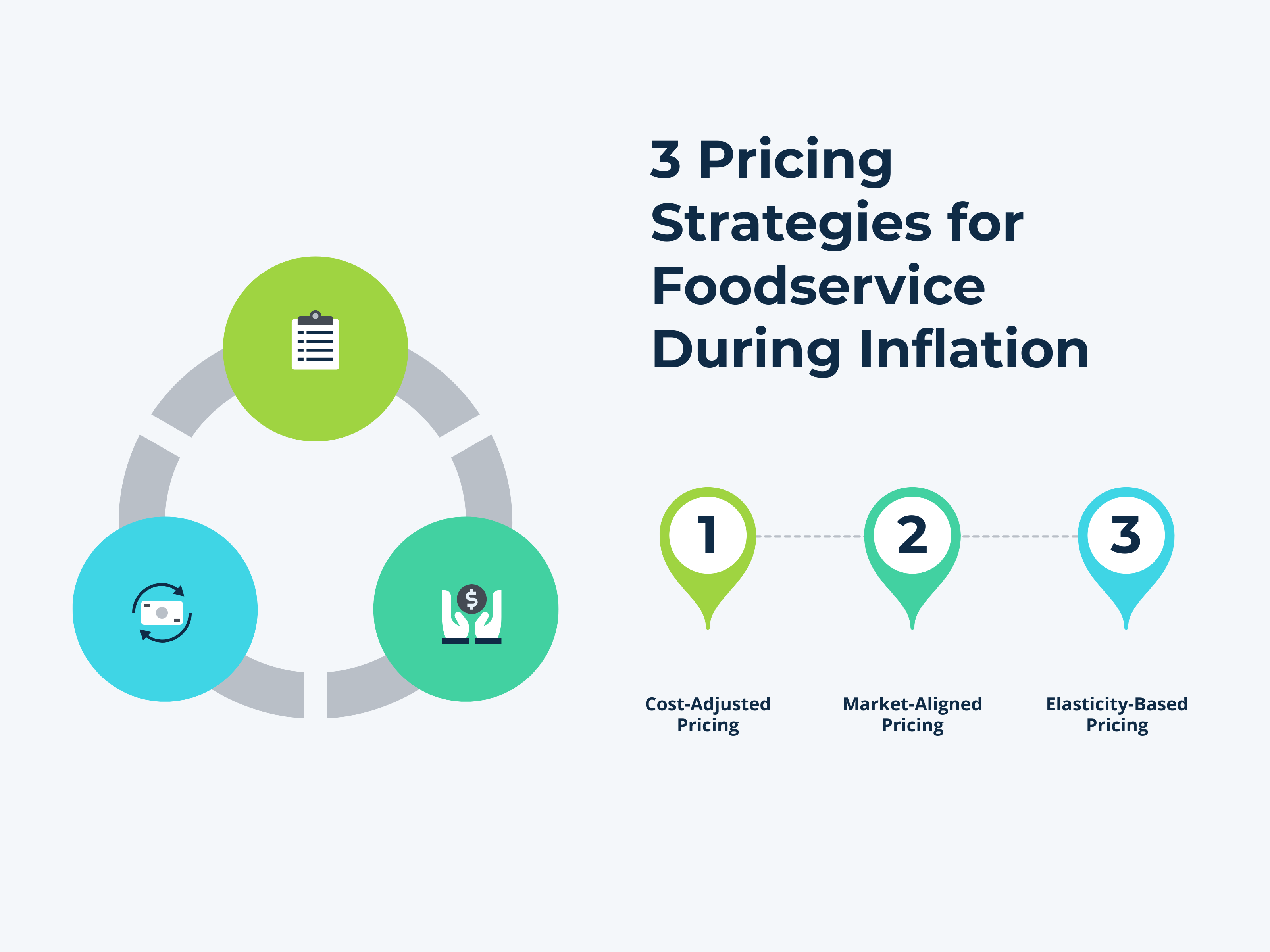
1. Cost-Adjusted Pricing
This is the most straightforward approach.
If costs increase 10%, prices increase 10%.
It is clear, fast, and easy to communicate internally. Large manufacturers or category leaders often rely on this method because their market position gives them more pricing flexibility.
Strengths:
- Protects margins quickly
- Simple to calculate
- Reduces internal debate
Limitations:
- Ignores competitive positioning
- May create resistance in price-sensitive segments
It works best when substitution risk is low and contractual relationships support price movement.
2. Market-Aligned Pricing
This strategy looks at competitor pricing before making adjustments.
Instead of matching cost increases directly, you assess where your product sits in relation to alternatives. Pricing may move slightly above or below competitors depending on positioning.
This requires:
- Reliable visibility into market pricing
- Awareness of distributor behavior
- Timing considerations
If one competitor raises prices and another delays, comparisons may not reflect the full picture. For niche or highly differentiated products, benchmarks may not exist at all.
Market alignment helps protect share, but it demands constant awareness of competitive shifts.
3. Elasticity-Based Pricing
This is the most analytical approach.
Price elasticity of demand measures how sensitive customers are to price changes.
If a 1% price increase results in a 2% drop in volume, demand is highly sensitive.
If the drop is only 0.5%, demand is relatively stable.
The objective is not simply raising prices or chasing volume. It is identifying the price point where total profit is strongest — balancing margin per unit with overall sales.
This requires:
- Historical sales data
- Scenario modeling
- Continuous monitoring
Elasticity is not fixed. It changes as customer budgets tighten or competitors adjust.
This method demands more analysis, but it provides clearer guidance on how far pricing can move without damaging overall profitability.
Choosing Your Path
There is no universal answer.
Some businesses need immediate margin correction. Others must protect volume in highly competitive environments. Some have strong brand positioning. Others compete primarily on price.
The key is making a deliberate decision.
Inflation tests planning discipline. A structured pricing strategy — informed by cost reality, inventory timing, and customer behavior — keeps leadership proactive instead of reactive.
When costs rise, clarity matters.
And in uncertain conditions, clarity keeps your business steady.