How Foodservice CPG Manufacturers Can Prevent Revenue Leakage?

Consumer Packaged Goods manufacturers have faced significant uncertainty in recent months, especially those that sell through a Foodservice or B2B route to market. In addition to inflation and cost volatility, manufacturers must deal with uncertainty around how often people are dining out and where they choose to eat.
Consumer behavior in food away from home has become less predictable. Some consumers may shift their ordering habits by choosing lower-priced menu items or skipping items like appetizers and desserts. Others may simply reduce how often they dine out.
These changes directly influence demand in the foodservice channel. While manufacturers cannot control these behaviors, they can examine internal processes that influence pricing and margins. For many CPG companies selling into foodservice, preventing revenue leakage begins with stronger control over contract pricing incentives.
Table of Contents:
- Why Foodservice Demand Is Hard to Predict?
- The Difference Between Retail and Foodservice Pricing
- Where Revenue Leakage Happens in Foodservice?
- Why Dead Net Margin Matters?
- The Hidden Challenge: Contract Complexity
- Focus on What You Can Control
Jump to a section that interests you, or keep reading.
Why Foodservice Demand Is Hard to Predict?
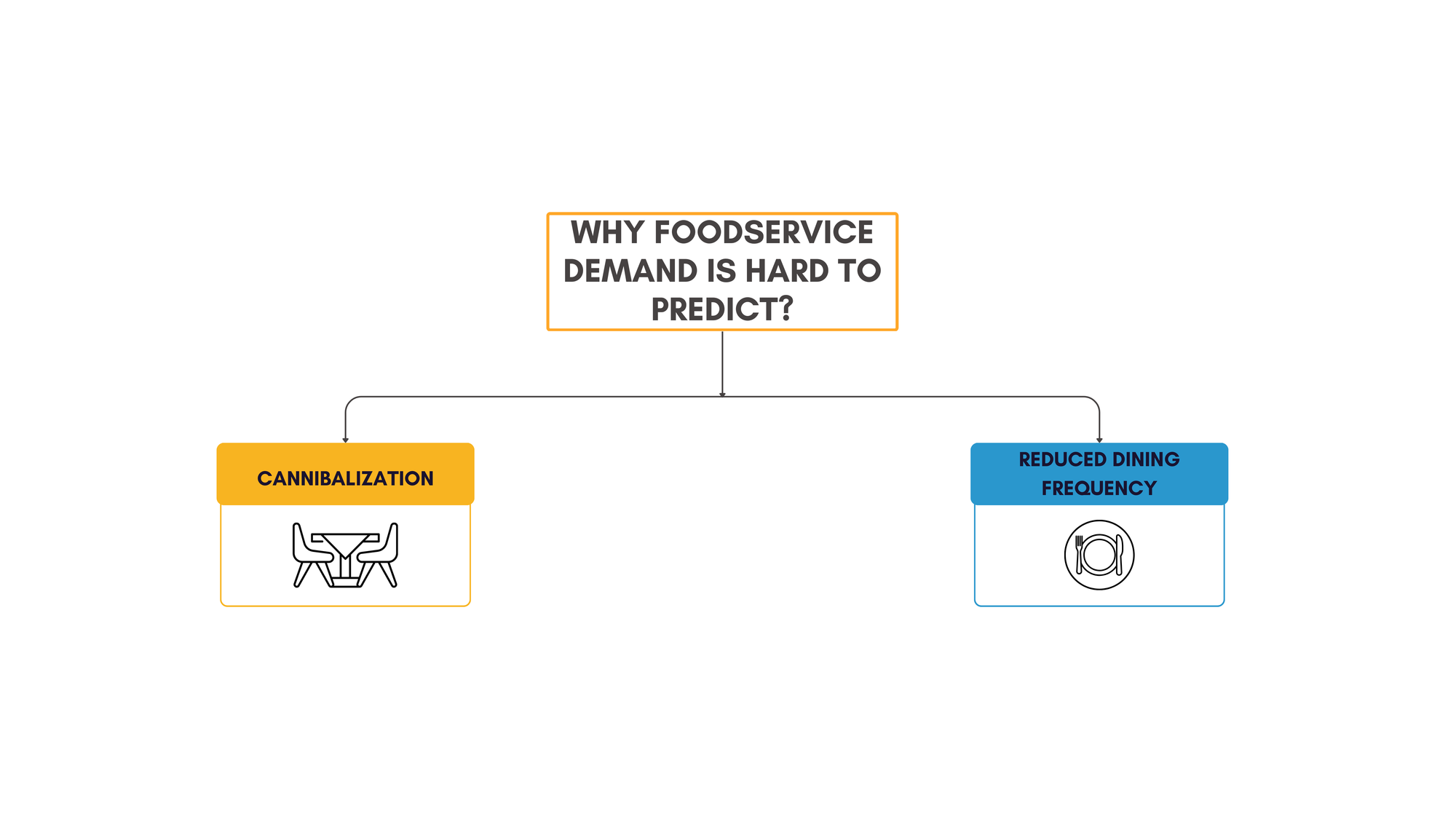
Two consumer behaviors play a major role in shaping foodservice demand.
1. Cannibalization
Cannibalization occurs when budget pressure causes consumers to trade down to less expensive menu items or choose lower-priced restaurants.
For example, a diner who previously ordered steak may now choose burgers instead. In other cases, consumers may shift from premium dining to more economical restaurant options.
These choices reduce demand for certain higher-margin products supplied by manufacturers to foodservice operators.
2. Reduced Dining Frequency
Another factor is the number of times consumers choose to dine out.
Economic pressure can lead consumers to reduce the weekly frequency of dining outside the home. When dining frequency decreases, restaurants purchase fewer ingredients, which directly impacts the manufacturers supplying those products.
For CPG manufacturers operating in the foodservice B2B route to market, cannibalization and reduced dining frequency are two key variables that can lead to revenue leakage and margin erosion.
The Difference Between Retail and Foodservice Pricing
Retail and foodservice routes to market operate differently.
In retail grocery environments, manufacturers typically respond to inflation by increasing prices or reducing promotional activity. Consumers still need to purchase groceries, although they may adjust their behavior by trading down to more economical brands or buying fewer items per trip.
Foodservice demand behaves differently because it is tied to discretionary dining decisions. As inflation impacts household budgets, consumers often change their food away from home behavior.
When these changes occur, foodservice demand becomes more volatile, making it more difficult for manufacturers to predict sales and protect margins.
Where Revenue Leakage Happens in Foodservice?
One of the most common sources of revenue leakage in the foodservice channel comes from contract pricing incentives.
Foodservice B2B sales frequently rely on negotiated contracts that include volume-based incentives tied to purchase conditions. These contracts often require customers to meet specific purchase thresholds within defined time periods.
For example:
- If a customer buys 1,000 cases in the first month at one price
- The next 2,000 cases may be sold at a better price
These types of pricing agreements reward customers for meeting agreed-upon purchase volumes.
However, they also introduce operational complexity. Systems must track purchase orders or invoiced sales to verify whether customers have met the contract terms required to qualify for the incented price.
When there is no validation of whether contract conditions have been met, customers may receive a discounted price that they did not earn. This is one of the primary ways revenue leakage occurs.
Why Dead Net Margin Matters?
Another source of margin erosion occurs when negotiated contract prices fall below the dead net margin threshold.
Dead net margin represents the lowest acceptable margin for a product after accounting for incentives and discounts.
In the past, manufacturers often relied on relatively stable raw material costs when producing their products. Because costs remained predictable, there was less focus on maintaining strict control over dead net margins.
Recent volatility in raw material costs has made this approach riskier. Without clear control over pricing agreements, contract prices can fall below acceptable margin levels.
In many cases, the lack of visibility into dead net margins was also tied to technology limitations. Many manufacturers rely on specialized applications that are not connected or capable of operating in real time. In other situations, organizations simply did not have a clear understanding of what their dead net margin threshold should be.
The Hidden Challenge: Contract Complexity
Foodservice contracts often include multiple overlapping incentive structures.
These incentives may require customers to purchase different volume tiers over defined time periods. Each condition must be tracked and validated to ensure that the correct price is applied.
The more contract terms that exist, the more complex pricing management becomes. Without proper tracking of purchase activity, it becomes difficult to determine whether customers have fulfilled the requirements tied to the incentive pricing.
When pricing is applied without confirming that contract terms have been satisfied, the manufacturer may unintentionally grant lower prices. Over time, these errors contribute to revenue leakage and reduced margins.
Focus on What You Can Control
Many manufacturers try to address revenue leakage by focusing on factors they cannot control, such as consumer dining behavior.However, there are areas within the foodservice route to market that manufacturers can control.
Contract pricing incentives and pricing governance are among the most important. By examining how contracts are negotiated, validated, and monitored, manufacturers can identify where revenue leakage occurs.
In many organizations, these areas were historically overlooked due to complacency or system limitations. Revisiting these processes can help manufacturers understand how pricing decisions impact margins.
Rather than trying to manage unpredictable consumer behavior, companies can begin by strengthening controls around pricing, incentives, and contract execution.
Conclusion
Foodservice demand will always fluctuate as consumer budgets and dining habits change. Cannibalization and reduced dining frequency are factors that manufacturers cannot directly control.
What manufacturers can control is how pricing contracts are structured and executed.
Revenue leakage often occurs when contract pricing incentives are not properly monitored or when negotiated prices fall below acceptable margin levels. By identifying these areas and improving oversight, manufacturers can address a major source of margin erosion in the foodservice B2B route to market.
Focusing on controllable factors within pricing and contract management allows CPG manufacturers to safeguard margins even during periods of uncertainty.