Best Practices for Managing Pharmaceutical Rebates

Managing pharmaceutical rebates requires structure, clarity, and strong financial discipline. With complex regulations, varied rebate structures, and growing pressure around drug pricing, companies benefit from following well-organized practices that support accuracy, compliance, and better financial outcomes. Drawing from the core points in your content, here are the key practices that help strengthen rebate management.
Table of Contents:
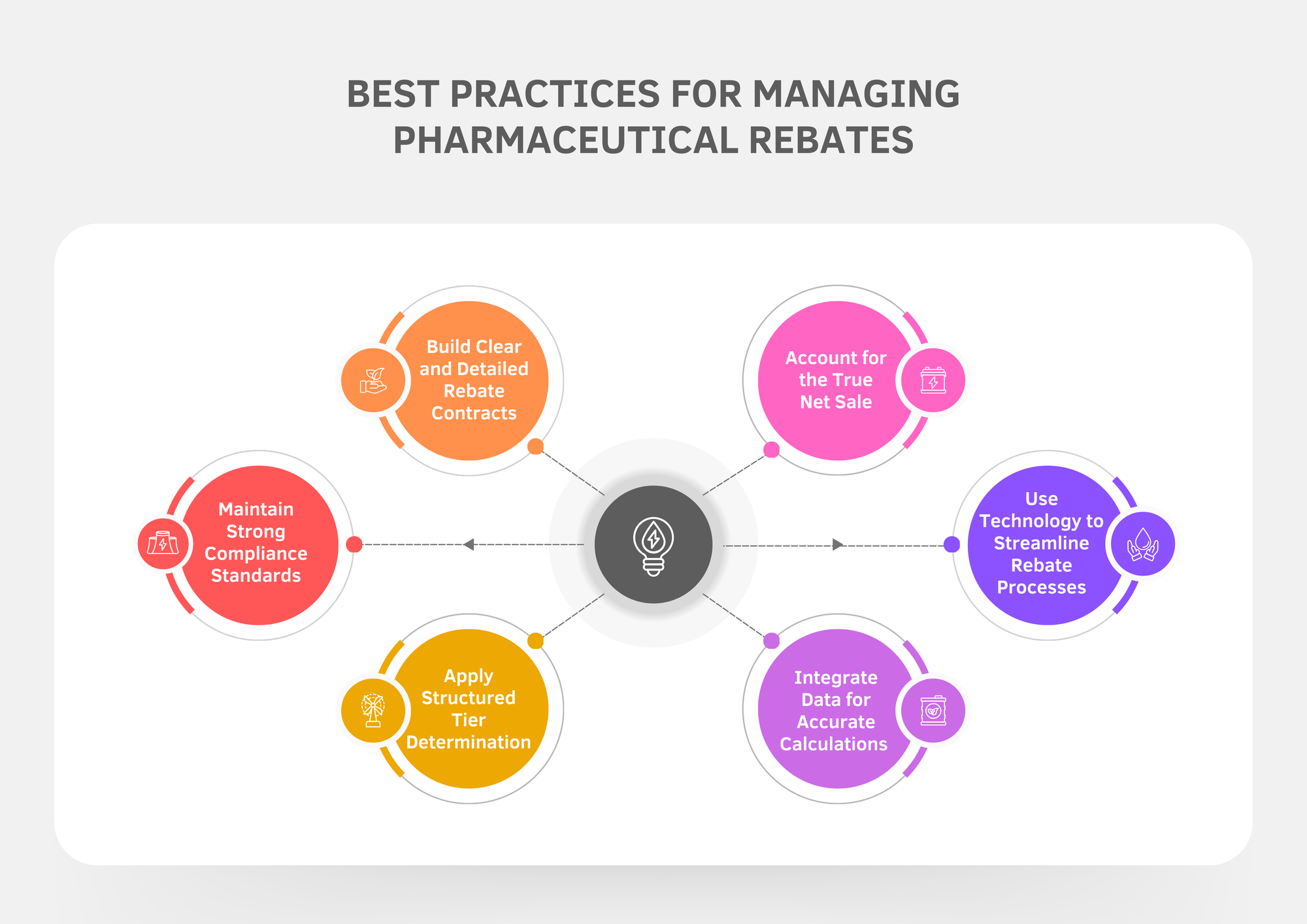
1. Build Clear and Detailed Rebate Contracts
2. Maintain Strong Compliance Standards
3. Apply Structured Tier Determination
4. Integrate Data for Accurate Calculations
5. Use Technology to Streamline Rebate Processes
6. Account for the True Net Sale
Jump to a section that interests you, or keep reading.
1. Build Clear and Detailed Rebate Contracts
Contracts form the foundation of rebate administration. Well-constructed agreements reduce confusion, support compliance, and minimize disputes.
Key practices include:
- Clear Terms: Spell out rebate amounts, qualification rules, timelines, and obligations.
- Room for Adjustments: Allow updates when drug pricing or market conditions change.
- Regular Reviews: Revisit contracts periodically so they remain aligned with current regulations and market shifts.
Because rebate agreements vary widely, consistent contract review ensures organizations stay aligned with their pricing goals and regulatory expectations.
2. Maintain Strong Compliance Standards
Rebate administration is highly regulated, especially with programs such as Medicaid and laws like the Anti-Kickback Statute and False Claims Act. Companies must track, store, and report rebate activity accurately.
Key practices include:
- Reliable systems for documenting transactions
- Accurate reporting to meet legal requirements
- Oversight to ensure Medicaid-related activities follow program rules
A careful compliance structure safeguards companies from penalties and maintains trust with partners and regulators.
3. Apply Structured Tier Determination
Tier placement influences rebate values and pricing strategies. Assigning drugs to the right tier helps strengthen negotiation positions and rebate outcomes.
Key practices include:
- Regular Tier Review: Update tier placement to reflect market conditions or new therapeutic insights.
- Data-Supported Decisions: Use analytics to assess usage trends, competitor pricing, and product performance.
A consistent tier review process ensures pricing decisions stay aligned with current market realities.
4. Integrate Data for Accurate Calculations
Accurate rebate calculation depends on synchronized, complete, and reliable data. Disconnected systems introduce errors and can distort financial projections.
Key practices include:
- Combine Multiple Data Sources: Align sales data, contract terms, and other inputs in a unified system.
- Consolidate and Centralize Data: Use a single source of truth to lower inconsistencies.
- Automate Data Processes: Automated collection and processing help minimize manual errors.
Better data alignment supports reliable rebate calculations and contributes to more realistic financial planning.
5. Use Technology to Streamline Rebate Processes
Modern rebate management tools can automate core tasks, reduce manual workload, and strengthen accuracy. Your content references specialized solutions, including incentX’s rebate software.
Key features highlighted in your content include:
- Automated Calculations: Helps reduce errors and save time.
- Integrated Data Capabilities: Brings multiple data points together for clearer analysis.
- Customizable Options: Allows companies to adapt the system to their workflow and contract structures.
Software solutions support smoother operations, timely updates, and better visibility of rebate performance.
6. Account for the True Net Sale
Rebates can significantly reduce the total revenue collected. If these deductions aren’t fully captured, financial reports may present an inflated picture.
Key practices include:
- Recognize all rebates when evaluating net sales
- Identify additional incentives or discounts that may influence revenue
- Maintain awareness of how rebates shape profit margins and forecasting
Accurate net-sale accounting supports more reliable planning and avoids unrealistic projections.
Conclusion
Managing pharmaceutical rebates requires precise contracts, strong compliance measures, solid data integration, consistent tier review, and the right technology. By following these practices—each grounded in the content you provided—pharmaceutical organizations can strengthen their rebate processes and maintain clearer financial control.